
By Nature’s Way Landscapes
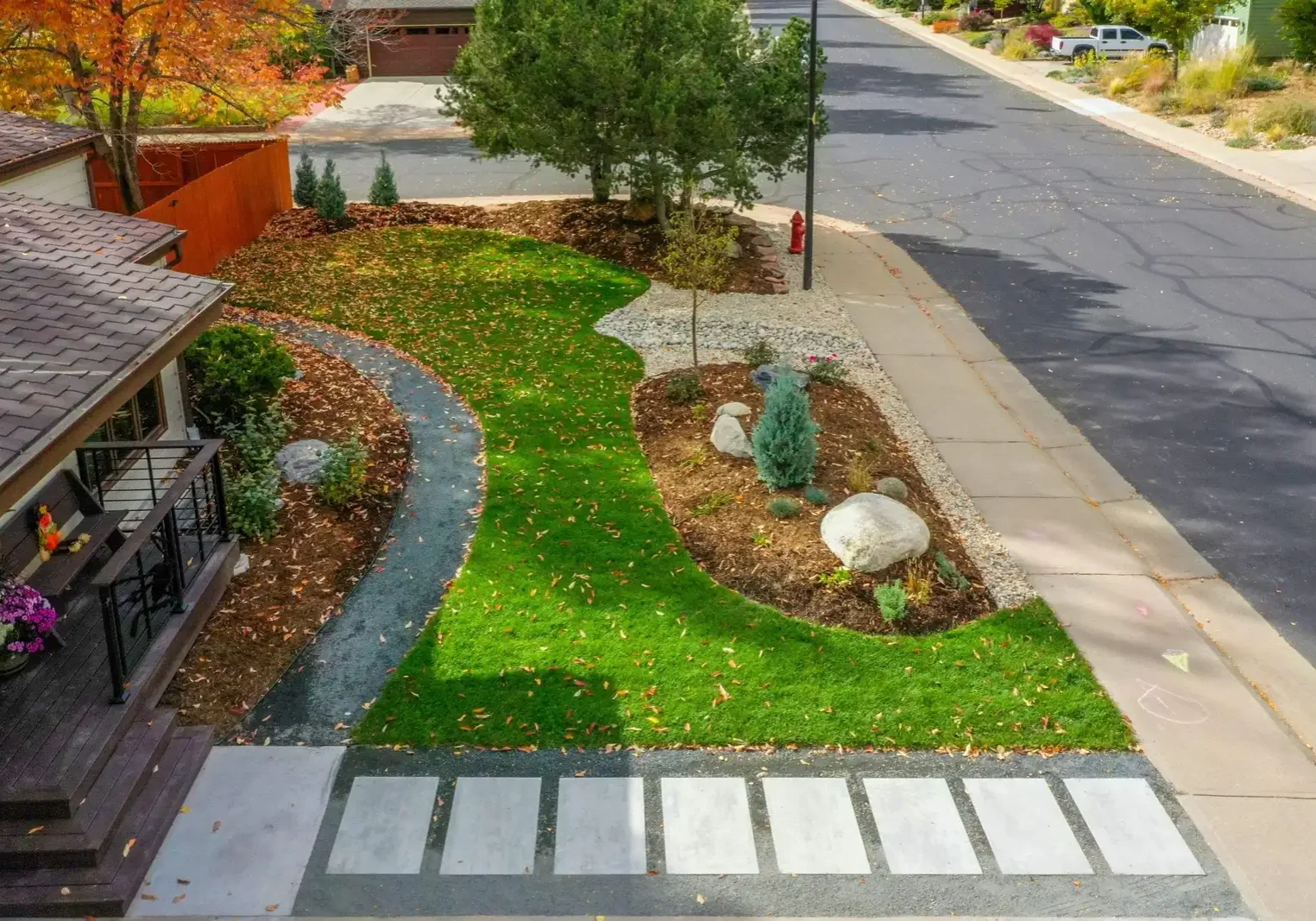
Drought tolerant landscaping in Boulder CO isn’t just a trend this year — it’s a necessity. As of early March 2026, the South Platte River Basin is at 49% of normal snowpack — the lowest ever recorded for this date. Denver Water’s latest update puts it bluntly: we’re about 4–5 feet of snow short of where we need to be, and we’d need another 8–10 feet before peak to catch up. That’s not happening.
If you’re looking at your yard right now and wondering what to do, you’re not alone. It’s the most common question we’re hearing from homeowners across Lafayette, Louisville, and Boulder. So here’s what we know, and what we’re doing about it.
How Bad Is It, Really?
Bad enough that Denver Water is already planning for additional watering restrictions this summer. The NRCS reports that 38% of Colorado’s SNOTEL monitoring sites are at all-time lows. That’s not a regional blip — it’s statewide.
Like most Front Range cities, Lafayette has permanent watering guidelines in place — no irrigation between 10am–6pm, and a three-day-per-week limit. That’s standard for Colorado. But if snowpack doesn’t improve by May, cities across Boulder County may tighten those rules further. Check Lafayette’s water efficiency page for the latest.
We’re sharing this because we’d rather you know now than find out in July when your trees are stressed and your lawn is toast.
If You Have a Turf Lawn
The instinct when things get dry is to water more. But in a drought, the issue usually isn’t volume — it’s absorption. When soil gets this dry, it turns hydrophobic. Water hits the surface and runs straight into the gutter. Your lawn looks like it’s getting watered, but the roots aren’t seeing any of it.
Here’s what actually helps:
Aerate first, water second. Double aeration — pulling deeper, more frequent cores — creates pathways for moisture to get down to the root zone. If you’ve got heavy clay soil (and if you’re in Lafayette or Louisville, you probably do), this is the single best thing you can do before summer hits.
Go easy on the nitrogen. Fast-release fertilizer forces top-growth, which means your grass needs even more water to survive. We use a slow-release approach that builds root strength instead. Deeper roots = less water needed to keep things green.
For our lawn maintenance clients, we handle all of this as part of the seasonal program. If you’re managing your own lawn, start with the aeration — it’ll make everything else you do more effective.
If You’ve Gone Xeric
Good call. Low-water landscapes are built for years like this. But “low-water” doesn’t mean “no water.”
The biggest threat to a xeric bed during a drought isn’t the lack of rain — it’s weeds. Invasive weeds have deep taproots that pull moisture out of the soil faster than your native plants can. In a normal year, it’s a nuisance. In a year like this, it can kill off plants you spent good money on.
For our xeric property care clients, we focus on keeping beds clean and weed-free so your plants aren’t fighting for every drop. We also keep hardscape surfaces clear of organic debris — not just for looks, but because a clogged mulch bed won’t absorb rain when we finally get some.
Check Your Irrigation Before You Turn It On
Before you fire up your system this spring, walk it. Zone by zone. You’re looking for broken heads, misaligned spray, and leaks you may not have noticed at shutdown last fall.
A single broken head can waste thousands of gallons in a week — and you’ll never know unless you watch it run. For our full-service maintenance clients, we do this as part of your seasonal startup. We walk every zone, adjust for wind-drift, and make sure drip emitters are hitting the root zone, not the sidewalk.
Lafayette also offers some solid resources here. Through the Outdoor Water Efficiency Rebate program, eligible residents can get free Rachio smart controllers installed, plus rebates on drip conversion kits and high-efficiency nozzles. Worth looking into before the season starts.
How We’re Getting Better at This
We don’t pretend to have all the answers. But we’re always looking for better ones. Our approach to water-smart landscaping is aligned with the principles of the ColoradoScaping™ program, a partnership between the ALCC and CSU Extension focused on Colorado-specific design, plant selection, and irrigation practices. We want to make sure the work we do for you is backed by real science, not just gut feel.
Whether we built your landscape through our design-build process or you just need help keeping things alive this summer, the goal is the same — a yard you actually enjoy spending time in, even in a tough year.
Your Drought Questions, Answered
Should I just stop watering my lawn entirely?
Not necessarily. A lawn that goes dormant in summer can usually recover in fall. But if you want to keep it green, the key is watering deeper and less often — two good soaks per week beat seven light sprinkles. And aerate first so the water actually gets where it needs to go.
My xeriscape is established. Does it still need water this year?
Probably, yes. Even established native plants benefit from an occasional deep soak during extreme dry periods like this one. Young plantings (first 2–3 years) definitely need supplemental water — their root systems aren’t deep enough yet to find moisture on their own.
How do I know if my irrigation system is wasting water?
Watch it run. Walk every zone and look for puddles on hardscape, dry spots in the turf, or spray hitting the driveway. Lafayette offers free Slow the Flow sprinkler evaluations through Resource Central — it’s worth the 30 minutes.
Are more water restrictions coming to Boulder County this summer?
Denver Water has signaled that additional restrictions are likely. Boulder, Lafayette, and Louisville each manage their own water supply differently, so restrictions may vary by city. Stay current with the Boulder Drought Watch Program and your city’s water department.
Helpful Resources
Boulder: Drought Watch Program — current supply status and restriction updates
Denver Water: Snowpack & Supply Update — the latest data on where we stand
All Boulder County: Resource Central — lawn replacement programs, sprinkler evaluations, water-wise garden kits
If you’re thinking about drought tolerant landscaping in Boulder CO — or just want a second set of eyes on your property before summer — let’s talk. We’ll walk your yard, look at what’s working and what’s at risk, and figure out a plan together. No pressure, no pitch — just a straight conversation about what your landscape actually needs.