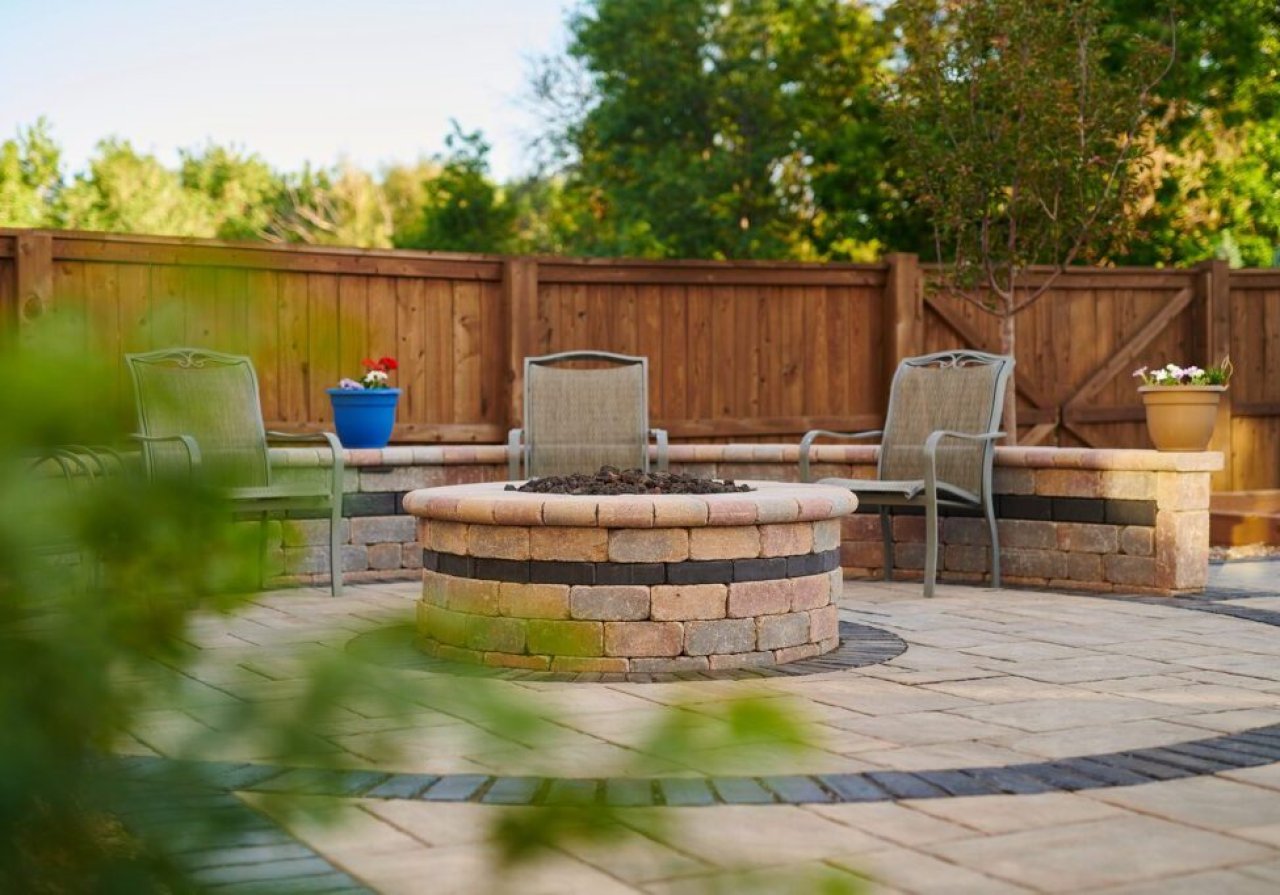
Sealing Your Way to a Durable and Beautiful Paver Patio
Read Post

By Nature’s Way Landscapes
The Short Answer: Which is Right for You?
If you are in a hurry, here is the bottom line for Colorado homeowners:
For the lowest upfront cost: Stamped Concrete is usually the winner. It is affordable and quick to install, though it comes with a higher risk of cracking later.
For the best long-term value: Interlocking Pavers take the prize. Because they are flexible, they handle our freeze-thaw cycles without snapping, making them the safer "forever" investment for the Front Range.
It’s mid-December in Lafayette. The holidays are here, the fire is crackling, and—if you look out your back window—your patio is likely buried under a layer of snow.
While we are cozy inside, our backyards are fighting a silent battle against the elements. Colorado winters are famous for their wild temperature swings, known as the "Freeze-Thaw Cycle." This daily shift from freezing nights to sunny days is the number one enemy of outdoor hardscapes.
If you are planning a new outdoor sanctuary for 2026, you are likely debating between the two heavyweights of patio design: Stamped Concrete and Interlocking Pavers.
To help you decide which is right for your home, we have broken down the honest pros and cons of each, specifically regarding how they handle our unique Front Range climate.
The "Economy" Option
Stamped concrete is a continuous slab that is poured, colored, and textured to look like stone or brick. It is often the go-to choice for homeowners looking for a quick update on a budget.
The Pros:
Lower Upfront Cost: It is usually the most affordable option because it is poured as a single slab, saving on installation time.
Continuous Aesthetic: Some homeowners prefer the smooth, uninterrupted surface without joints or seams.
Wide Color Variety: Concrete can be stained in almost any color to match your home's exterior.
The Cons:
The "Guaranteed Crack": Concrete is rigid. When our heavy clay soil swells or freezes, the slab has nowhere to move. Eventually, under pressure, it snaps.
Hard to Repair: Once a crack appears, you can patch it, but you can never hide it. The patch will always look like a scar.
Slippery When Wet: Sealed stamped concrete can become incredibly slick during snowy weather.
Our Honest Take: While concrete is budget-friendly, it carries the highest risk of long-term winter damage in our area. Because we believe in building projects that last a lifetime, Nature’s Way does not install stamped concrete. We simply cannot offer a warranty on a material that is so prone to cracking in our local soil conditions.
The "Smart Durability" Option
Pavers are individual high-strength concrete stones that fit together like a puzzle over a flexible base. They have become the gold standard for Colorado hardscapes for a reason.
The Pros:
Flexible Strength: Think of pavers like a zipper. We install them over a deep bed of road base, not rigid concrete. When the ground heaves in January, the pavers "ride" the movement without breaking.
Invisible Repairs: If a grease stain happens or a heavy rock chips a paver, we simply "unzip" that stone and replace it. The patio looks brand new again.
4x Stronger: High-quality pavers are manufactured to be significantly stronger and denser than poured concrete.
Non-Slip Texture: Most pavers have a textured surface that provides better grip in wet or snowy conditions.
The Cons:
Higher Initial Investment: Pavers require skilled craftsmanship and hand-installation, which costs more upfront than pouring concrete.
Weeds: If not installed correctly with polymeric sand, weeds can sometimes grow in the joints (though professional installation drastically minimizes this).
Our Honest Take: Pavers offer the best balance of value and durability for Colorado. They are a "lifetime" system that handles our weather with grace.
See examples of our Paver Patios
Stamped Concrete:
Upfront Cost: $ (Lowest)
Winter Durability: Low (Prone to cracking)
Maintenance: High (Needs re-sealing)
Repairability: Difficult to match
Interlocking Pavers:
Upfront Cost: $$ (Mid/High)
Winter Durability: High (Flexible system)
Maintenance: Low
Repairability: Easy (Swap stones)
At Nature’s Way, we want your sanctuary to be a source of peace, not stress. You shouldn't have to wince every time you shovel snow, wondering if you’ll find a new crack.
That is why we specialize exclusively in flexible paver systems. We have chosen to master the material that respects the Colorado climate, ensuring your investment looks as beautiful ten years from now as it does today.
Dreaming of a new patio for next summer? Winter is actually the perfect time to start the design process. Let’s sit down, look at the pros and cons for your specific yard, and plan a space that is ready for you the moment the snow melts.